Global Pipeline Knowledge
Why Reference Electrodes Give Unstable Readings on Buried Pipelines
Why Reference Electrodes Give Unstable Readings on Buried Pipelines
Unstable pipe-to-soil potential readings leave maintenance teams with an awkward question: is the buried pipeline’s cathodic protection changing, or is the measurement unreliable? Reference electrodes can give inconsistent results because of poor soil contact, electrolyte contamination, temperature changes, or deterioration. Stray currents, local voltage gradients, and damaged test leads can look much the same on a meter.
The wrong response is to keep adjusting rectifier output until the display looks acceptable. That can hide a measurement fault or change protection conditions elsewhere. A better approach is to isolate the electrode, contact conditions, measurement circuit, and electrical environment before deciding what needs maintenance.
Read the pattern before replacing anything
“Unstable” can mean several different things. A reading that jumps when someone touches the cable suggests a different fault from one that rises and falls at regular intervals. A potential that drifts slowly after placing an electrode on hot ground needs a different investigation again.
Before disturbing the setup, record the potential over time with the electrode stationary. Note whether the change is random, gradual, periodic, or linked to nearby equipment. Keep the meter polarity consistent; a common arrangement connects the positive terminal to the pipe and the negative terminal to the reference electrode, producing a negative pipe-to-soil reading.
Also distinguish instability from bias. A contaminated electrode may produce a steady but incorrect potential. Conversely, a sound electrode may accurately track a changing soil potential. A calm display does not prove accuracy, and a moving display does not prove electrode failure.
Poor soil contact is often the first practical check
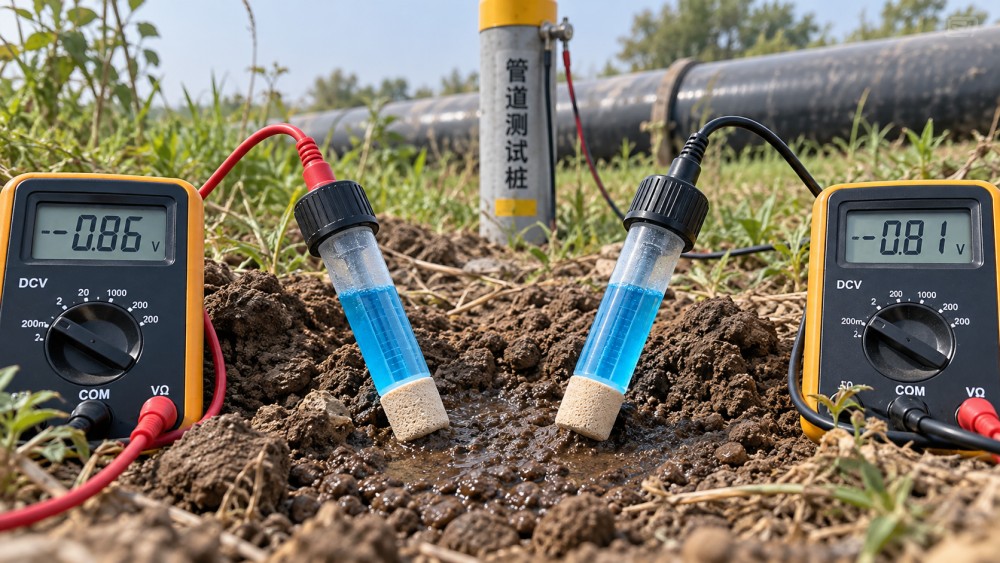
Portable copper/copper sulfate reference electrodes are widely used for buried steel pipeline surveys. Their porous junction needs an effective ionic connection with the soil. Dry gravel, frozen ground, loose surface material, and placement on pavement can leave a poor or intermittent contact path.
A high-input-impedance voltmeter reduces loading error, but it cannot make an open or severely resistive contact reliable. Symptoms may include slow settling, sensitivity to movement, or a reading that changes substantially when the electrode is reseated.
Expose suitable soil at the approved measurement location and seat the porous tip securely. Where the procedure permits, modest wetting with clean water can improve contact. Record that intervention. Do not add salt simply to force a stable reading: it changes local chemistry and can contaminate the electrode. Deep insertion is not automatically better either, particularly where buried services or coating damage are concerns.
In dry conditions, the electrode junction may need conditioning according to its manufacturer’s instructions. A blocked or dried-out junction should not be treated as merely a soil problem.
Check the electrode against a trusted reference
The most useful field substitution is usually a maintained, independently checked electrode of the same type. Compare the suspect and control electrodes under the same stable conditions, with their junctions close together in a suitable common electrolyte or approved comparison arrangement. Keep temperature differences small and avoid transferring contamination between them.
The voltage difference should be assessed against the manufacturer’s instructions and the survey procedure’s acceptance limits. There is no universal field tolerance suitable for every electrode type and measurement duty. Two electrodes taken from the same poorly maintained kit are not necessarily an independent check.
For refillable copper/copper sulfate cells, inspect the electrolyte condition, copper element, seals, junction, and electrical connection. Loss of solution, contamination, or surface films can affect performance. Salt exposure deserves particular attention because chloride contamination can alter the reference potential. Follow the specified cleaning and refill method; do not improvise an abrasive treatment or electrolyte recipe.
Temperature also changes reference potential. A cell carried in an air-conditioned vehicle and then placed on sun-heated soil may drift while it equilibrates. Compare electrodes at similar temperatures and use the applicable correction method where required. Keep light exposure consistent during comparison, especially with translucent cells.
If substituting a verified electrode resolves the problem repeatedly at the same location, remove the suspect unit from service pending maintenance. If both electrodes follow the same fluctuations, investigate the measurement circuit and field conditions rather than continuing to replace cells.
Do not overlook the meter and test-station wiring
A loose terminal can imitate an electrochemical fault remarkably well. Check the selected meter function, battery condition, input connections, lead insulation, and clips. Use an instrument with input impedance suitable for cathodic protection measurements and the contact resistance encountered.
With the electrode stationary, gently flex accessible leads and connections. Changes tied to that movement point toward an intermittent conductor or contact. Replace questionable leads rather than accepting a reading obtained only while holding a cable in one position. Moisture and dirt across exposed terminals can also create leakage paths.
At a test station, confirm that the terminal actually connects to the intended pipeline. Labels, drawings, and continuity history matter, especially where several pipelines, bonds, coupons, or casings share one enclosure. A damaged or disconnected pipe lead can produce misleading readings through unintended paths.
Perform continuity or resistance checks only under the approved procedure, with the circuit appropriately isolated. Do not use an ohmmeter indiscriminately on an energized circuit. Near power corridors or suspected AC interference, follow the site’s electrical safety requirements before handling exposed connections.
Sometimes the electrode is reporting a real electrical change
A pipe-to-soil measurement includes more than the electrochemical condition at the steel surface. With protection current flowing, voltage drop through the soil contributes to the measured value. Moving the electrode within a voltage gradient can therefore change the reading even though pipeline polarization has barely changed.
This matters near groundbeds, foreign structures, coating defects, and areas carrying interference current. If the reading changes as the electrode moves sideways, mark the positions and repeat the sequence. Do not select whichever location gives the most reassuring number. Use the placement required by the survey method and record access limitations.
Time-varying interference is different. DC traction systems, changing industrial loads, neighboring cathodic protection systems, and switching bonds can cause fluctuations with a fixed electrode. AC interference or electrical noise may also affect measurements, depending on the instrument and site conditions.
A handheld display may miss the pattern. Time-synchronized logging at the suspect point and suitable comparison locations can help distinguish a local measurement fault from a wider electrical event. Record rectifier and interrupter status alongside the potential trace. Correlation supports an investigation, but does not by itself prove which installation caused the disturbance.
Instant-off readings still require a valid setup
Current interruption can reduce the soil IR-drop contribution, but switching off one rectifier does not guarantee an IR-free potential. Other current sources, unsynchronized interrupters, switching transients, and instrument sampling timing can affect the result.
Use the approved interruption sequence and measurement window. Where influential sources cannot be interrupted, document that limitation and obtain corrosion-engineering advice on suitable assessment methods. A fluctuating “off” value should not be accepted simply because the meter has an instant-off function.
Permanent reference electrodes need a different diagnosis
A buried permanent electrode cannot usually be inspected like a portable cell. Its signal may deteriorate because of internal aging, cable damage, moisture ingress at a splice, or changing contact conditions around the installation. Excavation, drainage changes, or drying backfill can alter the local measurement environment.
Compare it with a verified portable reference using the installation drawing and a defined surface location. Expect some difference if the two electrodes occupy different voltage gradients or temperatures. If they use different reference chemistries, their raw readings are not directly interchangeable; account for the reference scales and relevant conditions.
A persistent offset is not, by itself, proof that the permanent electrode has failed. Look for changes from its commissioning baseline, agreement with nearby monitoring points, and cable condition. Surface checks can narrow the diagnosis, but they may not conclusively establish the condition of a deeply buried reference.
Decide what evidence is needed before changing protection output
A useful maintenance record should allow another technician to reproduce the measurement. Capture the electrode identity and type, comparison-check result, meter and lead details, exact placement, soil condition, temperature where relevant, potential trace, and cathodic protection operating state. Include what changed during troubleshooting—not just the final value.
That evidence-first approach reflects the pipeline integrity perspective behind GPIC: coating condition, protection demand, electrical interference, and measurement quality must be considered together. A change in potential may justify checking rectifier performance, bonds, isolation, or coating condition, but it does not identify which of those has deteriorated.
Apply the protection criterion specified for the asset’s environment and governing requirements, using the applicable standard edition and measurement method. Do not treat a familiar voltage threshold as universal, or compare an on-potential directly with a criterion requiring a different measurement basis.
If the measurement chain is unreliable, repair and verify it. If verified electrodes and sound wiring reproduce the fluctuation, preserve the time-based evidence and escalate the electrical investigation. Change cathodic protection settings only when the measurements are credible and the consequences for the connected pipeline system have been assessed.
Related Industries
Trending in Tech
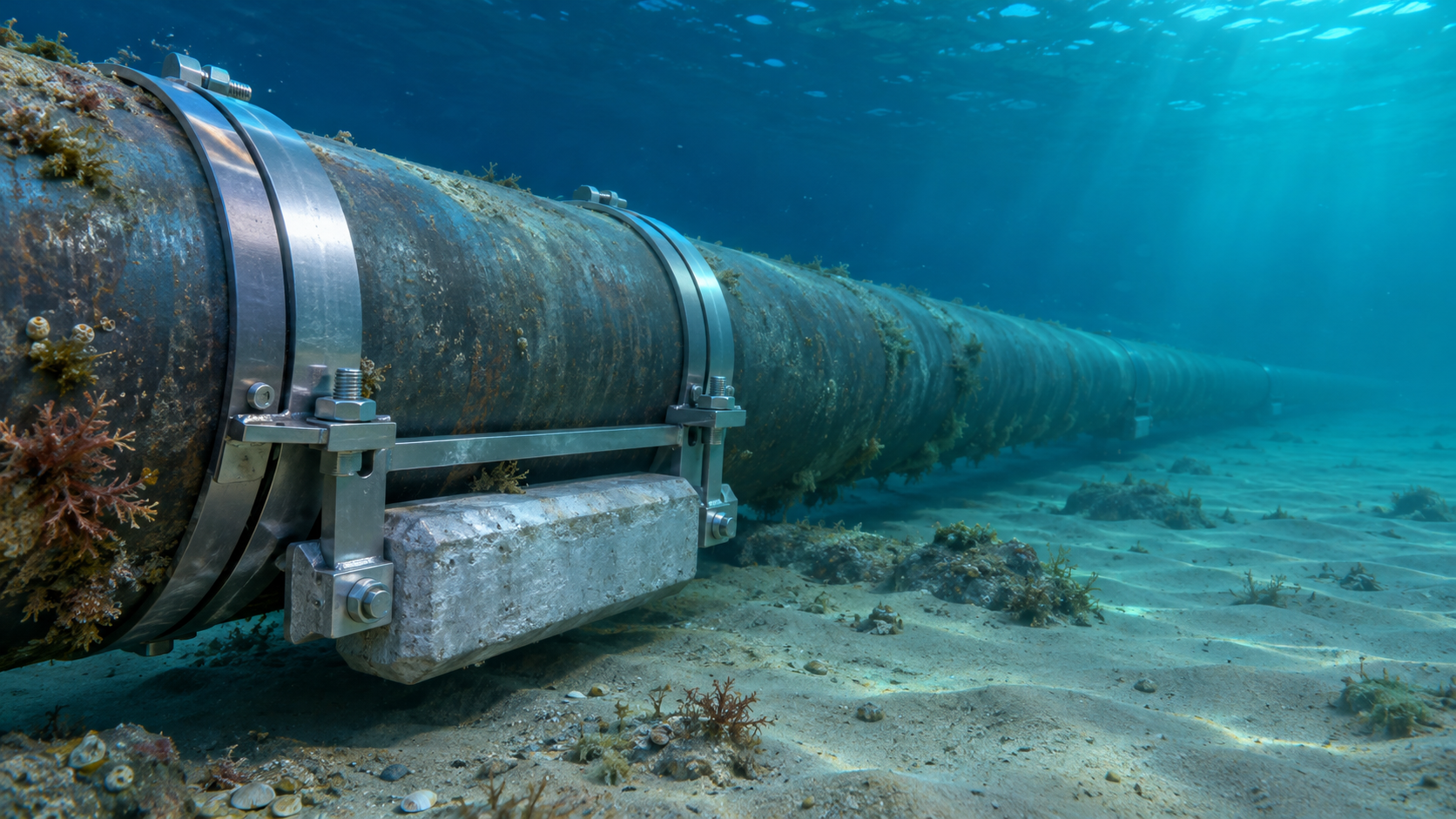
 Subsea Anode Retrofit Clamps: Sizing for Corrosion Protection LifeNov 06, 2026
- Global Project Radar: Tracking Pipeline Projects From Bid to AwardNov 06, 2026
- High-Frequency Induction Welded Pipe: Weld Quality and Heat InputNov 06, 2026
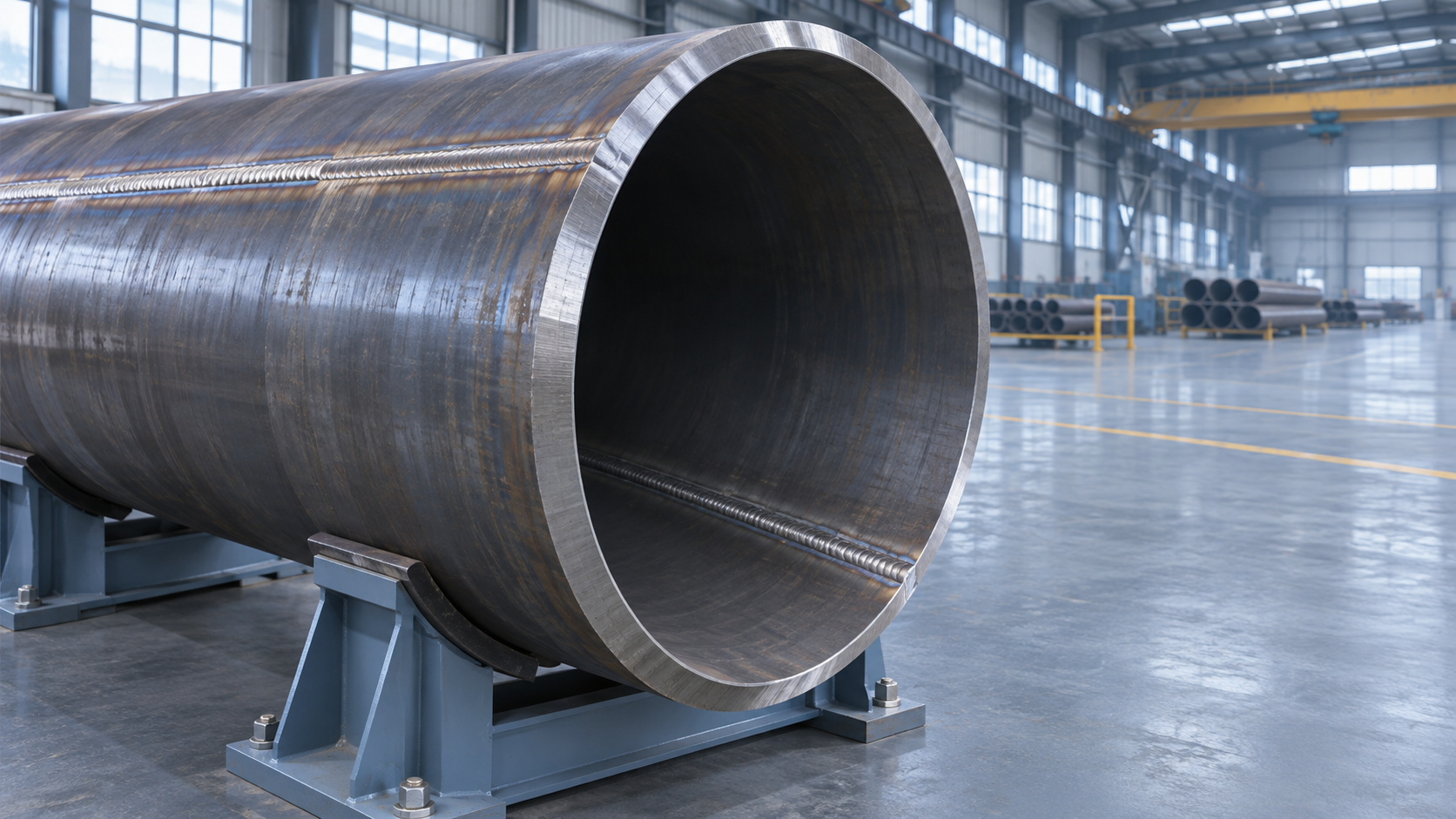
- Double Submerged Arc Welded Pipe: What to Check Before OrderingNov 06, 2026


Weekly Insights
Stay ahead with our curated technology reports delivered every Monday.
Questions about pipe blasting or corrosion protection? Leave a message for technical insights from GPIC.
We respect your privacy. Your information is strictly confidential.
Recommended News