Global Pipeline Knowledge
Cathodic Protection Systems: Why Buried Steel Pipelines Still Need Coatings
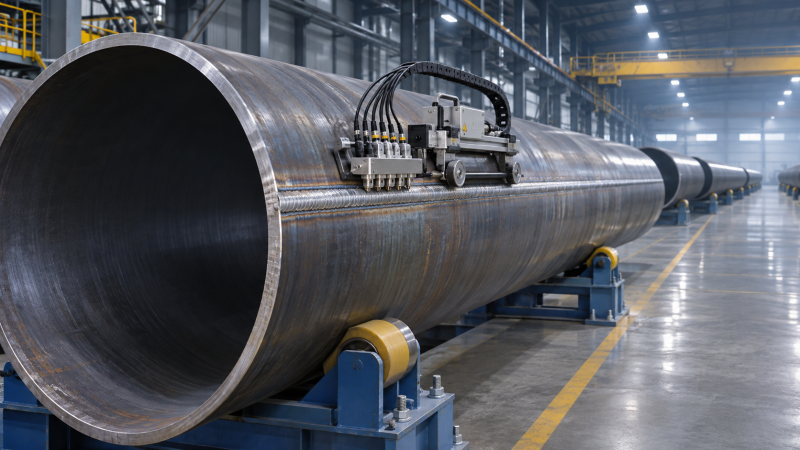
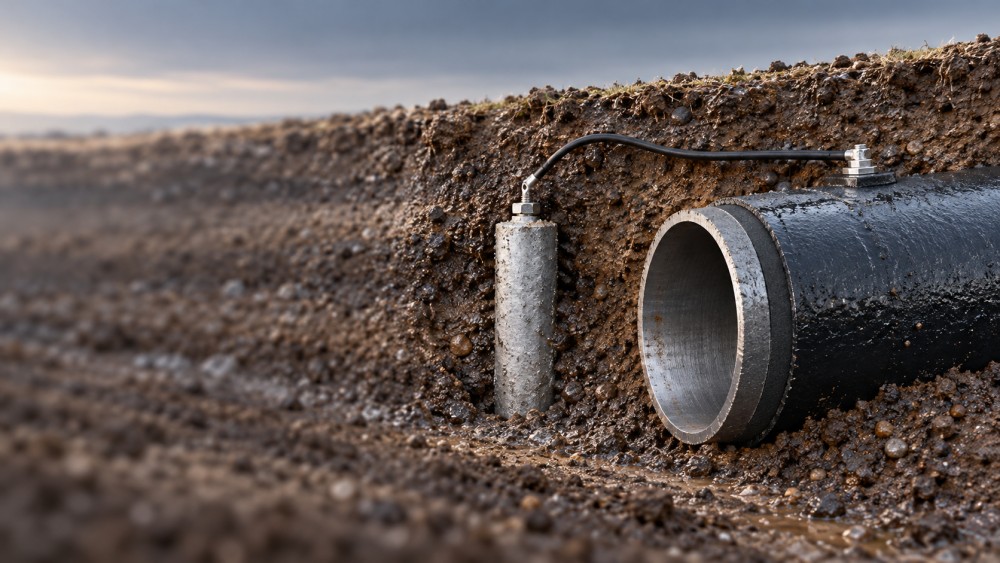
Cathodic protection systems control external corrosion on buried steel pipelines, but they work most effectively when a suitable coating already isolates most of the pipe from the soil. The coating reduces the surface area that needs protective current. Cathodic protection then acts at exposed areas, including small coating defects known as holidays, provided that current can reach the steel through the surrounding electrolyte.
A pipeline can therefore have an operating cathodic protection system and still need coating repairs. Increasing current cannot reliably compensate for every form of coating deterioration, particularly where detached material shields the steel. For owners and engineers, the useful question is how well the coating and cathodic protection function together under the pipeline’s actual ground conditions, temperature, and operating history.
Why coating changes the job cathodic protection must do
External corrosion involves electrochemical reactions at the steel surface. Moist soil can provide the electrolyte that allows current to flow between anodic areas, where iron dissolves, and cathodic areas, where reduction reactions occur. Soil moisture, oxygen availability, dissolved salts, and local differences along the pipe influence this process. Burial alone does not create a uniform corrosion environment.
A protective coating restricts contact between the steel and that environment. Its value extends beyond simply keeping water away: a sound coating also provides electrical resistance, limiting current exchange between the pipe and surrounding soil. Because complete, permanent isolation is difficult to maintain across an installed pipeline, cathodic protection supplies an additional means of controlling corrosion at exposed steel.
Cathodic protection shifts the electrochemical condition of accessible steel so that its dissolution is reduced. Galvanic systems obtain protective current from anodes made of a more active metal. Impressed-current systems use an external power source and an anode arrangement. Both depend on an electrical circuit that includes the pipeline, the anodes, and an ionic path through the electrolyte.
That circuit explains why coating condition has such a strong influence on system demand. A mostly intact coating leaves a relatively small area requiring current. As more steel becomes exposed, the current requirement generally increases. The relationship is not a simple calculation from coating area alone; soil resistivity, defect geometry, polarization, electrical continuity, and anode location also affect current distribution.
A useful conceptual comparison is between two otherwise similar pipeline sections. One has isolated coating holidays. The other has widespread coating loss. Protecting the second section can require greater current delivery and a more demanding distribution arrangement. Even if adequate protection can be achieved, the owner has acquired a larger dependence on anode capacity, power availability, electrical connections, and monitoring.
Coating consequently has value throughout operation, not just during construction. By reducing the exposed area, it makes protective current easier to distribute and can reduce anode consumption and power demand. It also provides a barrier during interruptions to cathodic protection, although its effectiveness during those interruptions depends on its actual condition.
Coating damage and coating shielding require different responses
A visible coating defect does not automatically mean cathodic protection has failed. An open holiday with good electrolyte access may receive protective current effectively. Conversely, a section that appears covered can contain a more difficult corrosion condition beneath coating that has lost adhesion.
Mechanical damage can occur during handling, lowering-in, backfilling, or later ground movement. Field joints and repaired areas introduce additional interfaces whose performance depends on surface preparation, application, and compatibility with the adjacent coating. In service, temperature exposure, water penetration, soil stress, and material aging can alter the condition of the coating system.
These processes can produce several distinct situations:
- An open holiday: steel contacts the soil electrolyte directly, allowing cathodic protection current to reach the exposed area if the surrounding conditions and system capacity permit.
- A disbonded but accessible area: coating has detached, while an electrolyte path allows some protective current beneath it. Protection depends on the resistance and geometry of that path.
- A shielded area: detached coating or another barrier restricts current access to the steel. Moisture may remain beneath the barrier even though protective current cannot reach the entire affected surface adequately.
This distinction matters because current measured elsewhere on the pipeline does not establish the electrochemical condition inside every underfilm pocket. A narrow opening beneath detached coating can admit moisture while providing a restricted path for current. Conditions near the opening may differ substantially from those deeper beneath the coating.
Shielding should not be assigned to a coating solely from its generic material name. The complete system matters: adhesion, permeability, thickness, construction, damage pattern, and behavior after aging all influence the outcome. Fusion-bonded epoxy and multilayer polyethylene systems, for example, have different constructions, but neither label alone establishes how a particular installed section will behave after disbondment.
There is also a limit to the strategy of applying more current. Higher output may improve protection at accessible defects while leaving a shielded location inadequately protected. Excessively negative conditions at accessible steel can promote coating disbondment and, for susceptible materials and conditions, increase hydrogen-related concerns. The appropriate response requires understanding where the current goes.
Where shielding is suspected, investigation may lead to excavation, removal of detached material, surface assessment, and coating repair. A rectifier adjustment cannot restore adhesion or remove a physical barrier. The distinction between accessible coating loss and inaccessible underfilm corrosion should guide the intervention.
Why a satisfactory potential reading is only part of the evidence
Cathodic protection monitoring often centers on pipe-to-soil potential measurements. These are essential, but they need interpretation. A reading reflects the measurement location, reference electrode condition and placement, current operating conditions, and voltage drops in the surrounding environment. It does not directly measure remaining wall thickness or prove that every nearby coating defect is protected.
When current flows through soil, the resulting voltage drop can contribute to a measured potential. An energized reading may therefore appear more protective than the steel’s polarized condition warrants. Interruption methods, coupons, and other measurement approaches can help address this issue, but their suitability depends on the pipeline configuration, current sources, and practical ability to obtain representative measurements.
Acceptance criteria must come from the applicable regulatory framework, standard edition, and project requirements. Their use also depends on the reference electrode, measurement method, material, and environmental conditions. A single potential value copied from another project is an unreliable basis for an integrity decision when those conditions differ.
The strongest interpretation combines evidence that answers different questions. Potential surveys assess protection conditions along the route. Coating surveys can help locate or characterize electrical indications associated with coating defects. Rectifier and anode records show how the protection system is operating. Excavation establishes local physical condition. Each contributes something that the others cannot provide alone.
For example, increasing current demand can be consistent with coating deterioration, but it can also result from an unintended electrical connection, a change in soil conditions, or interference from another source. A low current requirement is equally ambiguous: it may reflect an effective coating, high circuit resistance, or restricted current delivery. Output trends become useful when examined alongside potentials, circuit checks, and environmental information.
In-line inspection adds evidence about the pipe wall. Magnetic-flux-leakage inspection can identify metal-loss indications within the capabilities of the selected tool and analysis process. It does not directly demonstrate coating adhesion or adequate cathodic protection. Where inspection results identify external metal loss, correlating those locations with coating surveys, protection data, and excavation findings helps explain why corrosion occurred and whether the cause remains active.
Interference deserves particular attention near other buried structures, electrical installations, or changing current sources. Stray current can enter a pipeline at one location and leave at another; discharge locations can experience accelerated corrosion. Alternating-current interference also requires its own assessment where relevant. An apparently satisfactory conventional cathodic protection reading does not, by itself, resolve every interference-related risk.
Choosing and maintaining the combined protection system
Coating selection should start with the conditions the installed system must tolerate. Operating temperature, soil stress, moisture exposure, handling damage, installation method, and field-joint application all affect performance. A coating with suitable barrier properties can still perform poorly if it is applied to an inadequately prepared surface or damaged during installation.
For purchasing and specification work, laboratory properties are useful only when connected to the intended duty. Adhesion, impact resistance, flexibility, resistance to water exposure, and cathodic disbondment behavior address different failure mechanisms. Results obtained under one set of test conditions should not be treated as proof of performance across all temperatures, exposure periods, or soil environments. Specifications should identify the applicable test method and edition, together with the relevant test conditions and acceptance requirements.
Cathodic disbondment testing is especially relevant to this partnership because it evaluates coating behavior around an intentional defect under defined electrochemical exposure. It helps compare resistance to disbondment under those conditions. It does not predict service life on its own, nor does it establish that protective current will reach every area beneath coating that later detaches.
Field joints deserve the same engineering attention as the mainline coating. Their geometry, surface preparation, application conditions, and interfaces can differ from factory-coated pipe. Compatibility involves more than matching a product description: the joint system must tolerate the expected temperature and mechanical conditions while maintaining adhesion across the prepared steel and overlap areas.
During design, cathodic protection capacity should account for credible changes in coating condition over the intended operating period. That allowance depends on the selected coating, installation quality, route conditions, and maintenance strategy. Assuming permanent initial coating quality can leave insufficient capacity later. Assuming that unlimited additional current will remain available can conceal weaknesses in the protection concept.
For an operating pipeline, three questions help organize the next decision:
- Can current reach the exposed steel? Review the possibility of shielding, restricted electrolyte paths, casings, and other barriers before relying on increased output.
- Does the evidence show adequate protection where corrosion is plausible? Relate potential measurements to coating indications, interference conditions, and known external metal loss.
- Would restoring the coating address the cause more directly? Localized repair may reduce current demand and remove a persistent corrosion environment that electrical adjustment cannot correct.
The answer may be a coating repair, a change to current distribution, interference mitigation, or a combination of measures. The choice should follow the identified mechanism and the condition of the steel. A wall-loss indication also requires its own integrity assessment; improving external protection does not recover metal already lost.
Buried pipelines still need coatings because cathodic protection depends on access, distribution, and continued system operation. A well-adhered coating reduces the area exposed to corrosion and keeps that electrical task manageable. When monitoring becomes harder to interpret or current demand changes, coating condition belongs in the investigation. The practical objective is to establish that the barrier remains effective and that the steel exposed through its defects actually receives protection.
Related Industries
Trending in Tech
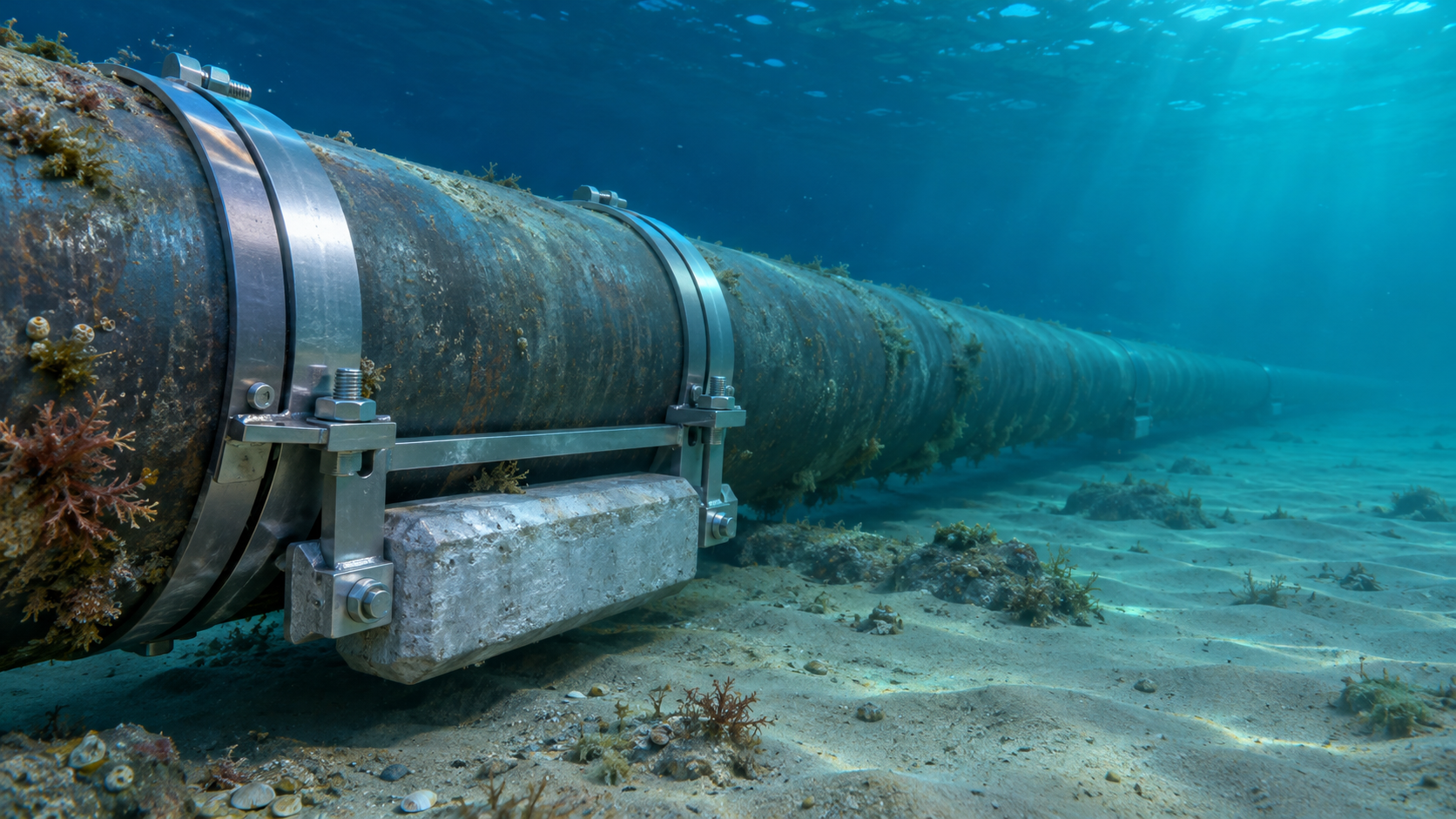
 Subsea Anode Retrofit Clamps: Sizing for Corrosion Protection LifeNov 06, 2026
- Global Project Radar: Tracking Pipeline Projects From Bid to AwardNov 06, 2026
- High-Frequency Induction Welded Pipe: Weld Quality and Heat InputNov 06, 2026
- Double Submerged Arc Welded Pipe: What to Check Before OrderingNov 06, 2026

Weekly Insights
Stay ahead with our curated technology reports delivered every Monday.
Questions about pipe blasting or corrosion protection? Leave a message for technical insights from GPIC.
We respect your privacy. Your information is strictly confidential.
Recommended News